Creative Biolabs is offering the most comprehensive services for antibody development projects. With strict regulation and effective execution, we are dedicated to providing the most valuable solutions to complete your projects.
HighlightsCreative Biolabs is offering the most comprehensive services for antibody development projects. With strict regulation and effective execution, we are dedicated to providing the most valuable solutions to complete your projects.
HighlightsCreative Biolabs has established a broad range of platforms for developing novel antibodies or equivalents. These cutting-edge technologies enable our scientists to meet your demands from different aspects and tailor the most appropriate solution that contributes to the success of your projects.
HighlightsWith deep understanding in antibody-related realms and extensive project experience, Creative Biolabs offers a variety of references to help you learn more about our capacities and achievements, including infographic, flyer, case study, peer-reviewed publications, and all kinds of knowledge that can assist your projects. You are also welcome to contact us directly for more specific solutions.
HighlightsGet a real taste of Creative Biolabs, one of the most professional custom service providers in the world. We are committed to providing highly customized comprehensive solutions with the best quality to advance your projects.
HighlightsHarnessing the unique immunological advantages of the rat system, Creative Biolabs delivers high-affinity, high-specificity Rat Monoclonal Antibodies (Rat mAbs) tailored for complex research, diagnostic, and therapeutic development applications. We have replaced traditional, time-consuming hybridoma techniques with our advanced, high-throughput phage display-based Rat Monoclonal Antibody discovery platform. By capitalizing on the construction and screening of immune antibody libraries, our service offers unparalleled speed, diversity, and flexibility. We deliver fully characterized monoclonal antibodies with exceptional performance, enabling breakthroughs in your most demanding projects.
While the mouse has long been the workhorse for monoclonal antibody production, the rat model offers distinct and critical advantages that make it the superior choice for many applications. Researchers increasingly turn to Rat Monoclonal Antibody Discovery to overcome challenges where mouse models fall short.
Traditional rat hybridoma technology, while foundational, is notoriously inefficient, slow, and prone to cell line instability. Creative Biolabs has engineered a state-of-the-art solution: a fully in vitro platform centered on phage display and sophisticated immune antibody library technology.
This phage display-based Rat Monoclonal Antibody platform captures the complete, immunized B-cell repertoire of a rat and displays it on the surface of bacteriophages. This "library" becomes a renewable resource that can be screened against any target with exceptional precision and speed.
Our process begins by leveraging the rat's in vivo affinity maturation. We perform hyper-immunization using your specific antigen. This crucial step pushes the B-cell response toward generating high-affinity antibodies. We then harvest the lymphocytes and utilize our expertise in the construction and screening of immune antibody library systems.
This method completely bypasses the inefficient cell-fusion step, eliminates the risk of unstable hybridoma cell lines, and allows for the rescue of valuable antibody genes from low-frequency B-cells that would be lost in a traditional workflow.
Creative Biolabs has optimized every step of the immune antibody library for Rat Monoclonal Antibody Discovery pipeline to ensure maximal efficiency, quality, and project speed.
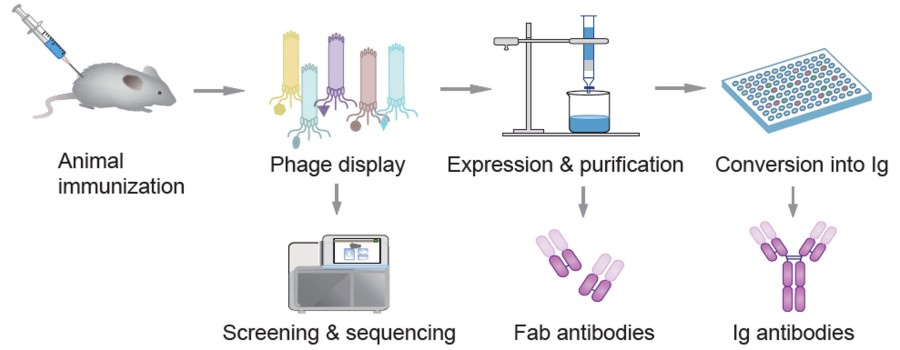 Fig. 1 Rat Immunized Phage Display Library.
We provide an end-to-end solution, customized to your project goals.
While our phage display immune antibody library platform is a powerful engine, we offer a comprehensive suite of discovery technologies to ensure we always use the right tool for the job. Our Monoclonal Antibody Generation from Various Immunized Antibody Libraries Services:
Don't let the limitations of traditional methods hold back your research. Contact Creative Biolabs today to leverage the speed, power, and diversity of our advanced phage display-based Rat Monoclonal Antibody platform.
Q: Why should I choose your phage display service over traditional rat hybridoma?
A: Our phage display-based Rat Monoclonal Antibody service is significantly faster, provides access to a much larger diversity, and is far more effective for difficult antigens (e.g., toxic, low immunogenicity). Furthermore, you receive the antibody's sequence, a permanent, stable digital asset, rather than a potentially unstable hybridoma cell line.
Q: What is the typical affinity of antibodies discovered from an immune library?
A: Because our platform starts with an immunized animal, we are capturing an in vivo matured B-cell repertoire. The resulting antibodies typically have high affinities, often in the sub-nanomolar range, which is ideal for demanding applications.
Q: What types of antigens can you handle for the Rat Monoclonal Antibody Discovery service?
A: Our platform is extremely versatile. We routinely work with purified proteins (recombinant or native), peptides, DNA, and complex antigens like whole cells or membrane preparations. Our phage display technology is particularly well-suited for targets that are toxic to cells, as the entire selection process is in vitro.
Q: Can you discover antibodies against a specific epitope or functional site?
A: Yes. We can design highly specific panning strategies. This includes "competition panning," where we use a known ligand or antibody to block a site, forcing the selection of antibodies that bind to other epitopes. We can also perform subtractive panning to remove antibodies that cross-react with a related protein, ensuring high specificity.
Q: What is the first step to starting a project?
A: Simply click "Get a Quote" or "Contact Us." You will be connected with one of our senior scientists to discuss your target, your research goals, and how our immune antibody library for Rat Monoclonal Antibody Discovery can be tailored to provide the perfect solution for you.
All listed services and products are For Research Use Only. Do Not use in any diagnostic or therapeutic applications.